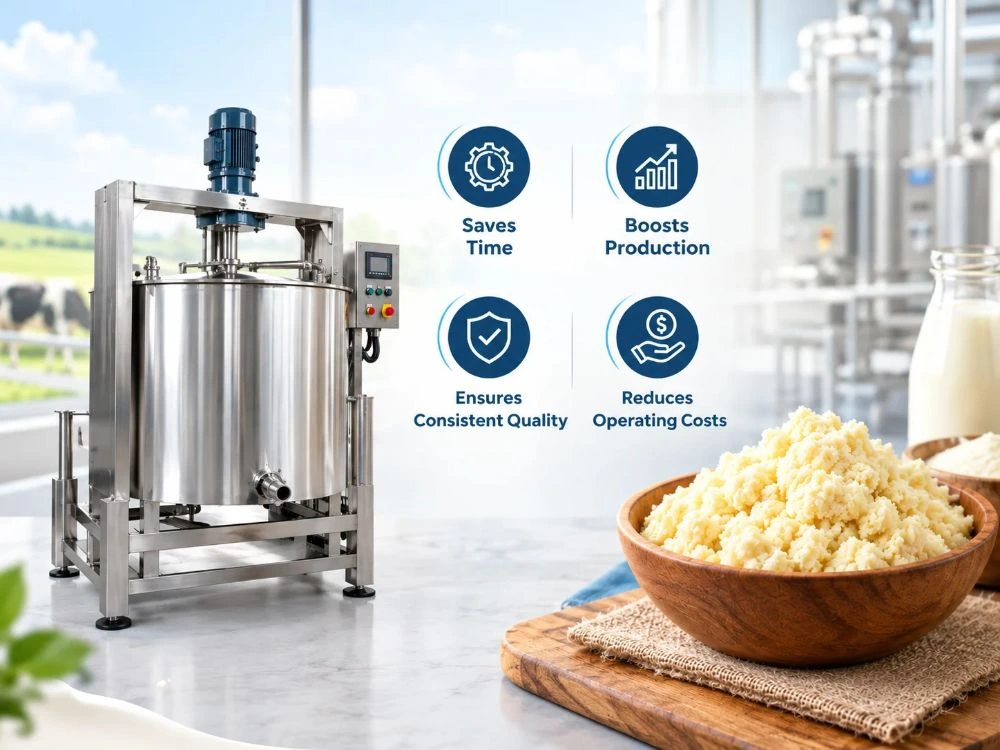
Khoya is a staple ingredient in many popular Indian sweets, from peda and barfi to gulab jamun and kalakand. For a small mithai shop, making khoya by hand may be manageable. But when production increases, the same process can become time-consuming, labour-intensive and difficult to keep consistent.
This is where an Automatic Khoya Making Machine can be useful. By handling key parts of the cooking and stirring process, the machine makes it easier to produce larger quantities while maintaining more consistent results.
Why Are Khoya Making Machines Useful for Dairy Businesses?
Traditional khoya preparation involves heating milk for a long time while continuously stirring it to prevent sticking or burning. Someone usually needs to keep an eye on the process throughout the batch.
A machine can take care of much of this repetitive work. This not only saves time but also gives the operator better control over the production process.
Here are some of the main benefits.
1. Faster Production
Time matters when a dairy business or sweet manufacturer has several orders to complete. Manual khoya preparation can take considerable time, particularly when large quantities are involved.
A machine can streamline the cooking and stirring process, helping businesses produce more khoya in a given working period. This extra capacity can be particularly useful during Diwali, wedding seasons and other periods when sweet orders suddenly increase.
2. More Consistent Quality
Getting the same texture and moisture level in every batch is not always easy with manual preparation. Even small differences in heating or stirring can change the final result.
A Khoya Making Machine provides more controlled processing. This can help reduce variations between batches and produce khoya with a more predictable texture and consistency.
For commercial sweet makers, that consistency matters because the quality of the khoya can affect the taste, texture and appearance of the final sweet.
3. Less Dependence on Manual Labour
Traditional khoya production requires workers to spend a significant amount of time stirring milk and monitoring the cooking process. Apart from being repetitive, this can make production difficult when experienced workers are unavailable.
Automated equipment takes over much of this routine work. Staff can then spend more time on other tasks, such as preparing ingredients, checking quality, cleaning equipment and handling packaging.
4. Better Production Efficiency
A Khoya Production Machine can help bring more structure to the production process. Controlled heating combined with mechanical stirring can make the operation more organised and reduce unnecessary manual intervention.
For businesses that prepare khoya every day, even modest improvements in production time and workflow can make a noticeable difference to overall efficiency.
5. Easier Hygiene Management
Hygiene is particularly important when working with milk and other dairy ingredients. Open cooking and frequent manual handling can increase the chances of contamination if proper precautions are not followed.
Machine-based processing allows production to take place in a more controlled setup. Equipment made from food-grade stainless steel can also make cleaning and routine maintenance easier.
Of course, the machine itself is only one part of food hygiene. Regular cleaning, proper handling and good operating practices remain essential.
6. Options for Different Production Requirements
Not every business needs the same production capacity. A neighbourhood sweet shop may require a relatively small batch, while a large dairy or commercial sweet manufacturer may need significantly higher output.
Modern Khoya Manufacturing Equipment is available in different capacities and configurations. Businesses can therefore consider factors such as daily production, batch size, available floor space and power requirements before selecting a suitable model.
How to Choose the Right Machine?
Buying a khoya machine is not simply about choosing the model with the lowest price. The equipment should suit the way your business actually operates.
Before making a decision, check the production capacity, batch size, heating system, construction material, power consumption and cleaning requirements. Available space is another practical point that is easy to overlook.
It is also worth asking about warranty coverage, after-sales service and spare-part availability. A machine that is easy to maintain and supported by the manufacturer can be more useful in the long run than one selected purely on its initial cost.
Frequently Asked Questions
It is food-processing equipment designed to automate important stages of khoya preparation, mainly heating and stirring. This reduces the amount of continuous manual work required during production.
Yes. Small sweet shops can consider lower-capacity machines designed for smaller batches. The right option will depend on daily production, available workspace and budget.
It can help. More controlled heating and stirring can reduce variations between batches and make the production process more predictable.
Look at production capacity, batch size, construction material, heating method, power consumption, cleaning requirements, maintenance, warranty and after-sales support. Also check whether spare parts are readily available.
Businesses can explore dairy-processing equipment from specialised manufacturers such as Mayra Dairy Industries and compare machines based on their production volume, operating requirements and available space.