Conveyor systems help companies transport raw materials, parts, or finished products between various locations within industrial enterprises. Starting from small processing facilities up to big manufacturing plants, conveyors provide organized transportation and reduce unnecessary movement and handling.
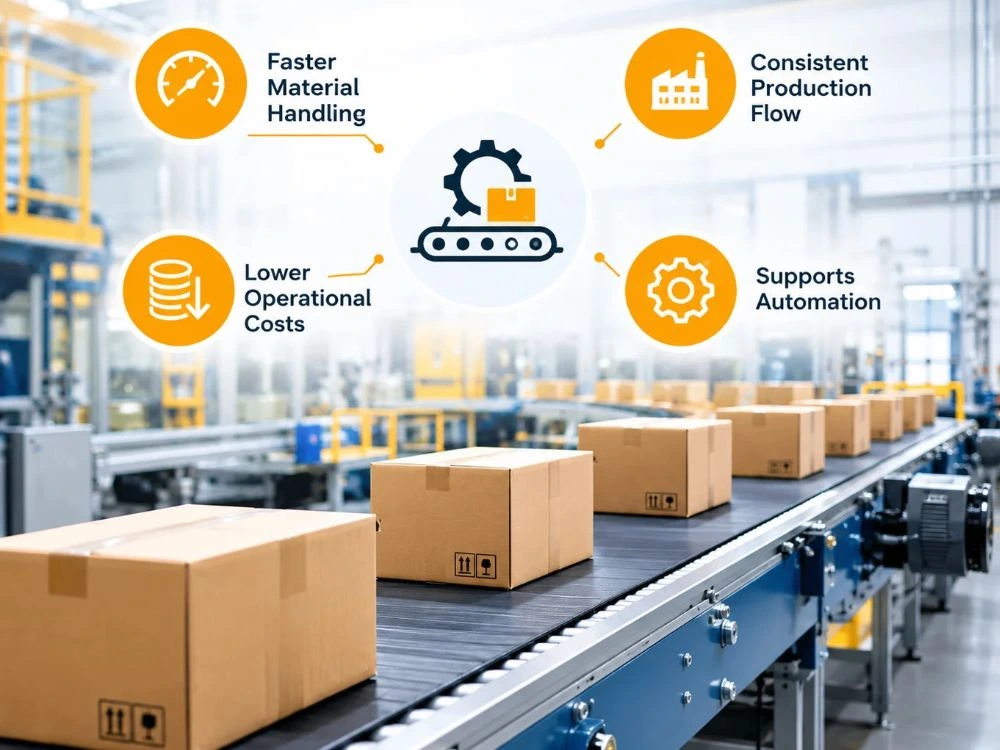
Faster Material Handling with Conveyor Belt Systems
1. Material Transportation Speeds
The manual transportation of the material between various locations within a facility is time-consuming and involves constant effort. With conveyor systems, the transportation route is established
2. Consistent Production Flow
For optimal operation of a production line, raw materials have to arrive at each stage at an appropriate time. The role of conveyor equipment is to link all stages, ensuring consistent flow of goods through the entire plant.
Properly designed Conveyor Belt Systems can transport products between production, packing, storage and shipping zones. The design of the system will be influenced by such criteria as product weight, size, operating environment and distance of transportation.
3. Cost Reductions
Human labor is needed for the manual transportation of goods and requires time and proper coordination. Conveyors minimize the need for excessive handling and allow efficient use of available resources. Conveyors also may prevent damage related to excessive handling when the equipment used is adequate for carrying certain goods.
Support for Automation
Today’s manufacturing plants depend increasingly on interlinked equipment to maintain their schedule and coordinate material movement. Automated conveyors can be integrated with sensors, control panels, sorting equipment and other production machines.
In some cases, automation is used for the regulation of product flow, identification of potential bottlenecks and minimizing the number of unnecessary stoppages. Proper configuration will depend on factory layout, production objectives and the extent of necessary control.
Selection of Suitable Conveyor System
Selection of appropriate equipment is not merely about price comparison. In addition to prices, manufacturers should pay attention to material type, load capacity, conveyor length, speed and floor space.
Working conditions matter as well. Factors like dustiness, moisture, high temperature and chemical exposure influence the performance of the equipment and materials. Before buying, one should take into account the access for maintenance, safety measures and the presence of technical support.
Cooperation with an experienced conveyor manufacturer, such as SRS Conveyors, will be able to help companies to assess their needs related to materials transportation and find appropriate solutions.
Role of Conveyors in Manufacturing Efficiency
Optimized materials transportation leads to increased productivity, improved planning, and more predictable manufacturing schedule. Thanks to avoidance of avoidable delays and redundant operations, conveyors can help to increase Manufacturing efficiency.
But equipment itself is not enough to achieve the desired results. Appropriate conveyor system design, preventive maintenance, staff training, and performance monitoring are necessary for effective conveyor technology application. In case all these elements are properly combined, conveyor technology becomes an actual investment into the future industrial growth.
Why Are Conveyors Important in Manufacturing?
Conveyor systems help to transport materials between different production stages, minimize repetitive manual handling, and ensure constant workflow. Conveyor systems are especially useful for facilities working with large amounts of materials
Frequently Asked Questions
Conveyors transport materials from one stage of manufacturing to another, minimize repetition of manual handling and keep the production flow consistent. They are especially needed in those factories that manufacture large amounts of goods.
Some of the examples include automotive manufacturing, food industry, pharmaceutical industry, packaging industry, mining, logistics and warehousing companies. Different conveyors are needed for each industry.
They decrease the amount of manual work related to the transportation of materials and connect production stages together. It will allow for minimization of delays and let people concentrate on production and inspection.
Businesses should evaluate load capacity, material type, operating speed, conveyor length, factory layout, safety requirements, maintenance needs and total ownership costs.
Routine inspections, belt alignment checks, cleaning, lubrication where required and timely replacement of worn components help maintain reliable operation. Maintenance procedures should follow the equipment manufacturer’s recommendations.
Disclaimer: This article is for informational purposes only and does not guarantee specific results from using conveyor systems. Readers should consult qualified professionals or manufacturers before making industrial equipment decisions.