Bathrooms have changed quite a bit over the years. They are no longer seen simply as functional spaces for showering, getting ready and storing toiletries. In many homes, the bathroom now gets the same design attention as the bedroom or living room.
That makes sense. You want the space to look good, but you also want it to work well every morning when everyone is in a hurry. Storage, lighting, easy cleaning and the right fixtures all matter. And when the bathroom is small, there is even less room for poor planning.
With that in mind, here are some of the bathroom trends getting attention.
1. Clean and Clutter-Free Layouts
A bathroom does not need to be packed with furniture and fixtures to feel complete. In fact, leaving some breathing room can make the space look and feel much better.
Wall-mounted toilets, floating cabinets and concealed plumbing help create a cleaner visual line. Recessed niches are also useful, especially inside the shower area, as they give you somewhere to keep shampoos and soaps without taking up valuable floor space.
The idea is not to make the bathroom look bare. It is simply about giving everything a proper place.
2. Natural Materials and Warmer Finishes
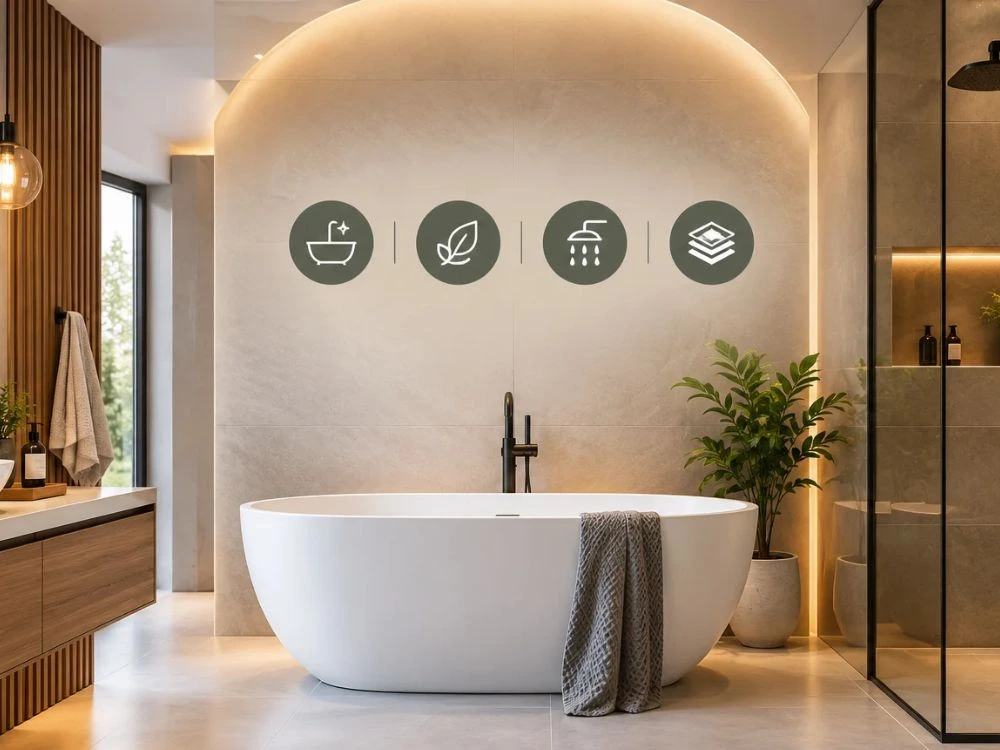
A bathroom filled with glossy tiles and shiny chrome can sometimes feel a little cold. That is why warmer colours and natural-looking materials are finding their way into more bathroom interiors.
Wood-effect cabinets, stone-look surfaces, earthy tiles and muted neutral colours can soften the overall appearance. Wood-effect finishes, in particular, give you the warmth of timber without the maintenance concerns that come with using natural wood in a damp environment.
If you are planning a Modern bathroom design, you do not have to cover the entire room in natural textures. A wood-effect vanity or a stone-look wall can be enough to add warmth and personality.
3. Large-Format and Statement Tiles
Tiles remain one of the easiest ways to change the look of a bathroom. But instead of heavily patterned designs across every wall, many homeowners are opting for larger tiles with subtle textures and finishes.
There is a practical advantage here, too. Larger tiles mean fewer grout lines, which can make the surface look more continuous and reduce some of the effort involved in cleaning.
Marble-effect tiles, concrete-inspired finishes and simple geometric patterns can all work well. If you like something more dramatic, try limiting a bold tile to one feature wall. It can create a focal point without making the entire room feel busy.
4. Floating Vanities
A floating vanity can make a small bathroom feel surprisingly different. Since the cabinet sits above the floor, you can see more of the flooring underneath, which gives the room a lighter appearance.
Cleaning is easier as well. There are fewer awkward corners to work around, particularly when you are trying to sweep or mop beneath the cabinet.
For a compact bathroom, drawer storage can also be more convenient than traditional cupboards. Deep drawers make it easier to organise toiletries, while a correctly sized basin and mirror can complete the vanity area without overwhelming the room.
5. Better Lighting for Everyday Tasks
Bathroom lighting has moved beyond the old combination of one ceiling light and a bulb above the mirror.
Today, a mix of ambient, task and accent lighting can make the room much more comfortable. Backlit mirrors, wall-mounted lights and LED strips under cabinets can add useful light while creating a softer atmosphere.
The mirror area deserves particular attention. Poor lighting can make even a beautifully designed bathroom frustrating to use. You need enough light for shaving, applying makeup, grooming or simply checking your face before heading out, without harsh shadows getting in the way.
6. Smart and Water-Efficient Fixtures
Technology is slowly becoming a more familiar part of the modern bathroom. Sensor taps, smart mirrors, digital showers and contemporary bidet systems are some of the options available to homeowners.
Water efficiency is another important consideration. Dual-flush toilets, aerated taps and efficient shower systems can reduce unnecessary water consumption without making everyday use less convenient.
If you are renovating the entire bathroom, think about these features before work begins. Electrical points, plumbing connections and fixture locations are much easier to arrange at the planning stage than after the walls and finishes are already in place.
7. Luxury That Feels Personal
Luxury bathroom design does not necessarily mean using the most expensive materials you can find. Often, it comes down to how well the different elements work together.
Good proportions, quality fittings, thoughtful lighting, frameless shower glass and coordinated finishes can make a bathroom feel polished without turning it into a showroom.
Even a small bathroom can look sophisticated. The trick is to avoid trying to use every trend at once. Too many colours, textures and finishes can make the space feel crowded. A restrained design often has a much stronger impact.
Frequently Asked Questions
Clean layouts, concealed storage, large-format tiles, floating vanities, layered lighting and water-efficient fixtures are among the trends shaping bathroom interiors.
Light colours, larger tiles, floating fixtures and clear glass shower partitions can help create a more spacious feel. A well-placed mirror can reflect light around the room, while keeping the floor and countertops free from unnecessary items can make the bathroom feel less crowded.
They can be, provided they offer a practical benefit. Sensor taps can make everyday use more convenient, while water-efficient fixtures may help reduce consumption. There is little value in adding technology simply because it is available if you are unlikely to use it.
White, beige, grey, taupe and earthy tones are versatile choices that work with a wide range of interiors. If you want more personality, stronger colours can be introduced through tiles, cabinets, fittings or smaller accessories.
There is no fixed timetable. A bathroom may need renovation when fixtures become outdated, plumbing issues become more frequent, surfaces begin to deteriorate or the existing layout no longer suits your household. With good materials and regular maintenance, a well-built bathroom can remain functional for many years.
Disclaimer: This article is for informational purposes only and reflects general bathroom design trends and ideas. Always consult a qualified interior designer, architect, or contractor before making renovation or purchasing decisions.